
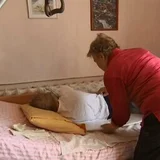
Eelmisel aastal hooldas Eestis 10 180 inimest kodus abivajajaid. Statistikas ei ole näha, kui paljud neist olid hooldatava sugulased.
2025. aasta detsembris sai hooldamise eest toetust veidi üle 8000 inimese. Keskmine toetussumma oli 61,47 eurot,
täisealiste hooldatavate puhul
59,59 eurot kuus.
täisealiste hooldatavate puhul
Tõlge fraasile: täisealiste hooldatavate puhul
EN
for adult care recipients
Sotsiaalabi korraldamine on
kohaliku omavalitsuse ülesanne
. Seadus jätab omavalitsustele otsustusruumi, mistõttu on toetussummad eri paigus erinevad.
kohaliku omavalitsuse ülesanne
Tõlge fraasile: kohaliku omavalitsuse ülesanne
EN
responsibility of the local government
"Abi ei peaks sõltuma üksnes inimese elukohast või formaalsest staatusest, vaid hinnatud vajadusest," ütles sotsiaalminister Karmen Joller.
Täisealise inimese hooldamise eest makstakse eri paigus 25 kuni 150 eurot kuus. Puudega lapse puhul varieerub toetussumma 30 kuni 210 euroni.
"Omavalitsused on kehtestanud
erinevad toetuse määrad
ja tingimused. Toetuse saamine võib sõltuda
hooldusvajaduse ulatusest
või
puude raskusastmest
," ütles Joller.
erinevad toetuse määrad
Tõlge fraasile: erinevad toetuse määrad
EN
different allowance rates
hooldusvajaduse ulatusest
Tõlge fraasile: hooldusvajaduse ulatusest
EN
the extent of care needs
puude raskusastmest
Tõlge fraasile: puude raskusastmest
EN
the severity of disabilities
Hooldekodus ööpäevaringsel üldhooldusel oleva inimese tarbeks kulub riigil keskmiselt 50,37 eurot ööpäevas. Eelmisel aastal sai sellist teenust 16 755 inimest. Avaliku sektori rahast kaeti keskmiselt 23,51 eurot ehk ligi 47% kogukulust.
"Hooldereformi järel on avaliku sektori osakaal üldhoolduse rahastamisel kasvanud," ütles Joller.
Riigil ja omavalitsustel puudub arvutus, kui palju maksab ühe inimese hooldamine hooldekodus võrreldes koduse hooldusega.
"Hooldekodus vajavad inimesed abi ööpäev ringi. Koduteenust tavaliselt sellises mahus ei osutata," märkis Joller.
Praegu määrab hooldaja kohalik omavalitsus ja võib maksta
hooldajatoetust
. Sotsiaalministeeriumil ei ole plaani süsteemi riigistada.
hooldajatoetust
Tõlge fraasile: hooldajatoetust
EN
caregiver allowance
"Kohalik omavalitsus võib abi paindlikult korraldada. Näiteks pakkuda
koduteenust
või maksta
hooldajatoetust
," lisas Joller.
koduteenust
Tõlge fraasile: koduteenust
EN
home care service
hooldajatoetust
Tõlge fraasile: hooldajatoetust
EN
caregiver allowance
Hooldereformiga suurendas riik kohalike omavalitsuste rahastust. Tänavu laekub neile ligi 70 miljonit eurot.
Joller rõhutas, et omastehooldajate toetamise süsteemi arendamine jätkub. Selle aasta lõpus avalikustatakse
hooldereformi mõjuanalüüs
ja
elanikkonna hoolduskoormuse
kordusuuring.
hooldereformi mõjuanalüüs
Tõlge fraasile: hooldereformi mõjuanalüüs
EN
impact analysis of the care reform
elanikkonna hoolduskoormuse
Tõlge fraasile: elanikkonna hoolduskoormuse
EN
care burden of the population
"Oluline on, et hooldaja enda toimetulek ja tervis oleksid toetatud," ütles Joller. "Eesmärk on, et lähedase hooldamine ei tooks kaasa
tööturult kõrvale jäämist
."
tööturult kõrvale jäämist
Tõlge fraasile: tööturult kõrvale jäämist
EN
exclusion from the labor market
Last year, 10,180 people provided care for those in need at home in Estonia. The statistics do not show how many of them were relatives of the care recipient.
As of December 2025, slightly over 8,000 people received benefits for caregiving. The average benefit amount was 61.47 euros, and for adult care recipients, it was 59.59 euros per month.
The organization of social assistance is the responsibility of the local government. The law leaves room for decision-making by local governments, which is why benefit amounts vary from place to place.
"Assistance should not depend solely on a person's place of residence or formal status, but on the assessed need," said Social Minister Karmen Joller.
For caring for an adult, payments range from 25 to 150 euros per month, depending on the location. For caring for a child with disabilities, the benefit varies from 30 to 210 euros.
"Local governments have established different rates and conditions for benefits. Receiving benefits may depend on the extent of care needs or the severity of disabilities," Joller said.
For a person in need of round-the-clock general care in a nursing home, the state spends an average of 50.37 euros per day. Last year, 16,755 people received such services. Public sector funding covered an average of 23.51 euros, or approximately 47% of the total cost.
"Following the care reform, the public sector's share in funding general care has increased," Joller said.
The state and local governments lack calculations on how much it costs to care for one person in a nursing home compared to home care.
"In nursing homes, people need care around the clock. Such a volume of home care is usually not provided," Joller noted.
Currently, the caregiver is determined by the local government and may receive caregiver benefits. The Ministry of Social Affairs has no plans to nationalize the system.
"Local governments can arrange assistance flexibly. For example, they can offer home care services or pay caregiver benefits," Joller added.
With the care reform, the state increased funding for local governments. This year, they will receive nearly 70 million euros.
Joller emphasized that the development of the system supporting family caregivers will continue. At the end of this year, the impact analysis of the care reform and the repeat study of the population's care burden will be published.
"It is important that the caregiver's own livelihood and health are supported," Joller said. "The goal is to ensure that caring for a loved one does not lead to exclusion from the labor market."