
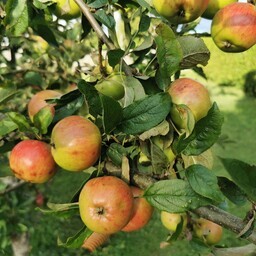
Paide Maksimarketi juhataja Eve Kuldre ütleb, et poes on praegu ainult välismaa õunu. "
Eesti õunu ei ole
,
viimati olid detsembris
. Nüüd on Poola ja Itaalia õunad," ütleb Kuldre.
Eesti õunu ei ole
Tõlge fraasile: Eesti õunu ei ole
EN
There are no Estonian apples
viimati olid detsembris
Tõlge fraasile: viimati olid detsembris
EN
last time they were here in December
Kuldre selgitab, et
hind on oluline
. "Kui Eesti õun maksab 4,99 eurot kilo ja Poola õun 99 senti, siis
ostjad valivad odavama
," ütleb ta.
hind on oluline
Tõlge fraasile: hind on oluline
EN
price is important
ostjad valivad odavama
Tõlge fraasile: ostjad valivad odavama
EN
buyers choose the cheaper one
Halika õunatalu Põlvamaal
müüb Eesti õunu. Neil on neid märtsini. Õunakasvataja Lauri Kasvand ütleb, et
ilm mõjutab hinda
. "Viimased suved on olnud halvad. Vihm ja vähe päikest teevad töö raskeks," ütleb ta.
Halika õunatalu Põlvamaal
Tõlge fraasile: Halika õunatalu Põlvamaal
EN
Halika apple farm in Põlva County
ilm mõjutab hinda
Tõlge fraasile: ilm mõjutab hinda
EN
weather affects the price
Kasvand ütleb, et poehinnast saab kasvataja alla poole. "Ülejäänud raha läheb maksudele, transpordile ja poele," selgitab ta.
Kasvand arvab, et
riik peaks aitama
. "Aianduses on palju käsitsitööd. Tehnoloogia aitaks tööd kiiremaks teha. Aga meil pole raha seda osta," ütleb ta.
riik peaks aitama
Tõlge fraasile: riik peaks aitama
EN
the state should help
"Kui tahame, et Eesti õun oleks poes odavam, peame
aiandust toetama
," lisab Kasvand.
aiandust toetama
Tõlge fraasile: aiandust toetama
EN
supporting horticulture
Eve Kuldre, the manager of Paide Maksimarket, says that currently, the store only has foreign apples. "There are no Estonian apples, the last ones were in December. Now there are Polish and Italian apples," says Kuldre.
Kuldre explains that price is important. "If an Estonian apple costs €4.99 per kilo and a Polish apple costs 99 cents, then customers choose the cheaper one," she says.
The Halika apple farm in Põlvamaa sells Estonian apples. They have them until March. Apple grower Lauri Kasvand says that the weather affects the price. "The last summers have been bad. Rain and lack of sunshine make the work difficult," he says.
Kasvand says that the grower gets less than half of the store price. "The rest of the money goes to taxes, transportation, and the store," he explains.
Kasvand believes that the state should help. "There is a lot of manual labor in horticulture. Technology would help speed up the work. But we don't have the money to buy it," he says.
"If we want Estonian apples to be cheaper in stores, we need to support horticulture," adds Kasvand.