
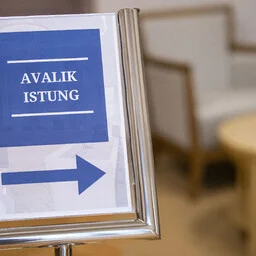
Justiitsministeerium plaanib muuta kohtute seadust
.
Eesmärk on kiirendada kohtupidamist
.
Viimase 10 aasta jooksul on kohtuasjad läinud aeglasemaks
.
Justiitsministeerium plaanib muuta kohtute seadust
Tõlge fraasile: Justiitsministeerium plaanib muuta kohtute seadust
EN
The Ministry of Justice plans to change the court law
Eesmärk on kiirendada kohtupidamist
Tõlge fraasile: Eesmärk on kiirendada kohtupidamist
EN
The goal is to speed up court proceedings
Viimase 10 aasta jooksul on kohtuasjad läinud aeglasemaks
Tõlge fraasile: Viimase 10 aasta jooksul on kohtuasjad läinud aeglasemaks
EN
Over the past 10 years, court cases have become slower
Riigilõivud tõusevad 50%
.
Rahvakohtunikud kaovad
.
Istungite protokolle hakkab tegema tehisintellekt
.
Riigilõivud tõusevad 50%
Tõlge fraasile: Riigilõivud tõusevad 50%
EN
State fees will increase by 50%
Rahvakohtunikud kaovad
Tõlge fraasile: Rahvakohtunikud kaovad
EN
Lay judges will be abolished
Istungite protokolle hakkab tegema tehisintellekt
Tõlge fraasile: Istungite protokolle hakkab tegema tehisintellekt
EN
Artificial intelligence will start making session minutes
Veebruaris esitas justiitsministeerium valitsusele eelnõu. Selle eesmärk on kiirendada kohtumenetlust.
Kohtupidamine on aeglustunud kõigis kohtuastmetes
.
Kohtupidamine on aeglustunud kõigis kohtuastmetes
Tõlge fraasile: Kohtupidamine on aeglustunud kõigis kohtuastmetes
EN
Court proceedings have slowed down at all court levels
Tsiviilasjade menetlusaeg on 34% pikem kui 2020. aastal. Süüteoasjade menetlusaeg on 2% pikem. Haldusasjade menetlusaeg on 13% pikem.
Kohtupidamise aeglus halvendab usaldust
. Inimesed kaotavad usku õigussüsteemi. Ärikliima halveneb.
Kohtupidamise aeglus halvendab usaldust
Tõlge fraasile: Kohtupidamise aeglus halvendab usaldust
EN
The slowdown of court proceedings undermines trust
Eelnõu soovib muuta kohtumenetluse seadusi.
Lisaks tuleb parandada arvutisüsteeme
. Mõned toimingud saavad minna kohtust välja.
Lisaks tuleb parandada arvutisüsteeme
Tõlge fraasile: Lisaks tuleb parandada arvutisüsteeme
EN
In addition, computer systems need to be improved
Kohtunikud peavad rohkem spetsialiseeruma
. Praegu on kaks spetsialiseerumisala. Tulevikus saab neid üheksa.
Kohtunikud peavad rohkem spetsialiseeruma
Tõlge fraasile: Kohtunikud peavad rohkem spetsialiseeruma
EN
Judges need to specialize more
Rahvakohtunikud kaovad
. Praegu osaleb tavainimene kohtuotsuste tegemisel. Kuid asjad on liiga keerulised. Seetõttu otsustab edaspidi ainult professionaalne kohtunik.
Rahvakohtunikud kaovad
Tõlge fraasile: Rahvakohtunikud kaovad
EN
Lay judges will be abolished
Tsiviilasjades tahetakse kiirendada menetlust. Kohtud jagavad aega keerukate ja lihtsate asjade vahel. Eelnõu annab kohtunikele rohkem aega keerukatele asjadele.
Lihtsate menetluste piirmäärad tõusevad
. Praegu on piirmäär 3500 eurot. See tõuseb 5000 euroni.
Eesmärk on suunata inimesi lahendama vaidlusi kohtust väljas
.
Lihtsate menetluste piirmäärad tõusevad
Tõlge fraasile: Lihtsate menetluste piirmäärad tõusevad
EN
The thresholds for simple proceedings will increase
Eesmärk on suunata inimesi lahendama vaidlusi kohtust väljas
Tõlge fraasile: Eesmärk on suunata inimesi lahendama vaidlusi kohtust väljas
EN
The goal is to direct people to resolve disputes outside the court
Tehisintellekt hakkab tegema istungite protokolle. Kui vaja parandada, kasutatakse salvestist.
Riigilõivud tõusevad 50%
. Näiteks 350-eurose asja lõiv tõuseb 100 eurolt 150 euroni. 2500-eurose asja lõiv tõuseb 350 eurolt 525 euroni.
Riigilõivud tõusevad 50%
Tõlge fraasile: Riigilõivud tõusevad 50%
EN
State fees will increase by 50%
The Ministry of Justice plans to amend the courts' law. The goal is to speed up court proceedings. Over the past 10 years, court cases have become slower.
State fees will increase by 50%. Lay judges will be abolished. Artificial intelligence will start preparing session minutes.
In February, the Ministry of Justice submitted a bill to the government. Its aim is to expedite court proceedings. Court proceedings have slowed down in all court levels.
The processing time for civil cases is 34% longer than in 2020. Criminal cases take 2% longer. Administrative cases take 13% longer.
The slowdown in court proceedings undermines trust. People lose faith in the justice system. The business climate deteriorates.
The draft bill seeks to change court procedural laws. In addition, computer systems need to be improved. Some actions may be moved outside the courts.
Judges need to specialize more. Currently, there are two specialization areas. In the future, there will be nine.
Lay judges will be abolished. Currently, ordinary citizens participate in making court decisions. However, cases have become too complex. Therefore, only professional judges will make decisions in the future.
In civil cases, the aim is to speed up proceedings. Courts will allocate time between complex and simple cases. The draft bill gives judges more time for complex cases.
The threshold for simple proceedings will increase. Currently, the threshold is €3,500. It will rise to €5,000. The goal is to direct people to resolve disputes outside the courts.
Artificial intelligence will prepare session minutes. If corrections are needed, recordings will be used.
State fees will increase by 50%. For example, the fee for a €350 case will rise from €100 to €150. The fee for a €2,500 case will increase from €350 to €525.