
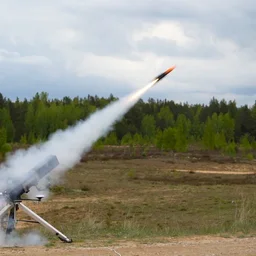
Poola kaitsetööstusfirma PGZ ja Eesti tehnoloogiaettevõte Frankenburg Technologies on
kirjutanud alla lepingule
. Lepinguga hakatakse tootma
droonide vastu rakette
, mida nimetatakse Mark 1.
kirjutanud alla lepingule
Tõlge fraasile: kirjutanud alla lepingule
EN
signed a contract
droonide vastu rakette
Tõlge fraasile: droonide vastu rakette
EN
missiles against drones
Praegu on õhutõrje probleemiks hind. Tavaliselt kasutatakse ründedroonide allatulistamiseks kallaid rakette. See viib kiiresti reservide lõppemiseni. Frankenburg Technologiesi Mark 1 rakett on odavam ja lihtsam toota.
Mark 1 raketil on
nutikas juhtimissüsteem
. See võimaldab raketil ise leida sihtmärki ilma operaatori abita. Raketi
500-grammine lõhkepea
sisaldab klaasikilde. Klaasikillud on efektiivsemad kui metallikillud ja nad on kergemad. Klaas
ei häiri radarit
nii palju kui metall.
nutikas juhtimissüsteem
Tõlge fraasile: nutikas juhtimissüsteem
EN
smart guidance system
500-grammine lõhkepea
Tõlge fraasile: 500-grammine lõhkepea
EN
500-gram warhead
ei häiri radarit
Tõlge fraasile: ei häiri radarit
EN
does not interfere with radar
Rakett suudab hävitada droone kuni kahe kilomeetri kauguselt ja kuni 1,5 kilomeetri kõrguselt. Rakett kasutab
tahkekütusemootor
it, mis annab kiire stardi.
tahkekütusemootor
Tõlge fraasile: tahkekütusemootor
EN
solid-fuel engine
Aprillis-juunis hakatakse Mark 1 rakette katsetama Ukrainas. Katsete tulemused on aluseks turvalisemate rakettide tootmiseks Poolas.
PGZ ja Frankenburg Technologies töötavad välja ka uue versiooni, Mark 2. See suudab hävitada droone kuni 5-8 kilomeetri kauguselt. See annaks parema kaitsestrateegia linnadele ja strateegilistele sihtmärkidele.
Rakettide tootmine Poolas tähendab Euroopa
droonidevastase julgeolekukeskuse loomist
.
droonidevastase julgeolekukeskuse loomist
Tõlge fraasile: droonidevastase julgeolekukeskuse loomist
EN
creation of a anti-drone security center
Frankenburg Technologies on teinud
koostöölepingu
ka Lõuna-Korea kaitsetööstusfirmaga Hanwha Aerospace. Koostöös töötatakse välja droonidevastased süsteemid.
koostöölepingu
Tõlge fraasile: koostöölepingu
EN
cooperation agreement
Frankenburg Technologiesi juhtideks on Eesti
kaitsevaldkonna tipptegelased
. Ettevõtte suurim osanik on Skeleton Technologies tegevjuht Taavi Madiberk. Tema käes on 62% ettevõtte osalusest.
kaitsevaldkonna tipptegelased
Tõlge fraasile: kaitsevaldkonna tipptegelased
EN
top figures in the defense sector
Polish defense industry company PGZ and Estonian technology company Frankenburg Technologies have signed an agreement. The contract will initiate the production of rockets against drones, called Mark 1.
Currently, the issue in air defense is cost. Expensive rockets are usually used to shoot down attack drones. This quickly leads to the depletion of reserves. Frankenburg Technologies’ Mark 1 rocket is cheaper and easier to produce.
The Mark 1 rocket features an intelligent guidance system. It allows the rocket to find its target without operator assistance. The rocket’s 500-gram warhead contains glass fragments. Glass fragments are more effective than metal fragments and are lighter. Glass interferes less with radar than metal.
The rocket can destroy drones up to two kilometers away and at altitudes up to 1.5 kilometers. The rocket uses a solid-fuel motor for a quick launch.
From April to June, Mark 1 rockets will be tested in Ukraine. The test results will form the basis for the production of safer rockets in Poland.
PGZ and Frankenburg Technologies are also developing a new version, Mark 2. It will be able to destroy drones up to 5-8 kilometers away. This would provide better defense strategies for cities and strategic targets.
The production of rockets in Poland signifies the creation of a European drone defense security hub.
Frankenburg Technologies has also signed a cooperation agreement with South Korean defense company Hanwha Aerospace. Together, they are developing anti-drone systems.
The leadership of Frankenburg Technologies consists of top figures in Estonia’s defense sector. The company’s largest shareholder is Skeleton Technologies CEO Taavi Madiberk, who holds 62% of the company’s shares.