
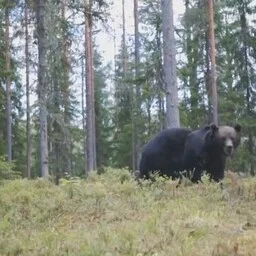
Until now, bears could be hunted from August 1 to the end of October. The Environmental Board issued a certain number of hunting permits each year in areas where bears caused problems.
Now, based on court practice, bear hunting is allowed only in exceptional cases. For example, if it is necessary to prevent damage caused by bears or to avoid dangerous situations.
The director of the Environmental Board, Tanel Türna, said that whenever bears raid beehives or damage silage, it will be assessed whether they can be hunted or not.
Although bears can no longer be hunted for population control purposes, it may be necessary to do so at the end of this summer.
Aimar Rakko, an advisor at the Ministry of Climate, said that managing the bear population is necessary. Otherwise, problems will arise that need to be solved.
The European Commission has stated that Estonia has been too strict in interpreting the Habitats Directive. The directive allows population management to prevent damage.
According to Eleri Lopp, who advocates for bear rights, limiting the bear population is not possible. He said that the number of bears does not affect their behavior. Incidents can occur both in small and large bear populations.
According to the Environmental Board, the paths of humans and bears are most likely to cross in Ida- and Lääne-Viru counties and Central Estonia.