
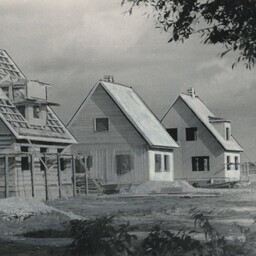
Sõjajärgsed majad on osa Eesti ajaloost
. Paljud inimesed on nendega seotud. Mõned elavad neis ise, teiste vanemad või vanavanemad on seal elanud. Need majad on igal pool Eestis. Mõned on renoveeritud, teised ootavad veel uuendamist.
Sõjajärgsed majad on osa Eesti ajaloost
Tõlge fraasile: Sõjajärgsed majad on osa Eesti ajaloost
EN
Post-war houses are part of Estonian history
Nõukogude ajal oli raske maja ehitada
.
Riik andis krundi ja väikese toetuse
, aga inimesed pidid ise ehitama. Sageli aitasid pereliikmed või sugulased. See oli raske, aga ka perekondlik tegevus.
Nõukogude ajal oli raske maja ehitada
Tõlge fraasile: Nõukogude ajal oli raske maja ehitada
EN
During the Soviet era, it was difficult to build a house
Riik andis krundi ja väikese toetuse
Tõlge fraasile: Riik andis krundi ja väikese toetuse
EN
The state provided a plot of land and a small subsidy
Majad olid sageli poolikud
, sest materjale oli vähe.
Inimesed pidid improviseerima
. Nad muutsid projekte oma vajaduste järgi. Näiteks jäeti mõned aknad ehitamata või tehti esikud suuremaks.
Majad olid sageli poolikud
Tõlge fraasile: Majad olid sageli poolikud
EN
The houses were often unfinished
Inimesed pidid improviseerima
Tõlge fraasile: Inimesed pidid improviseerima
EN
People had to improvise
Tüüpprojektide järgi olid majad sarnased
, aga igaüks tegi neist oma versiooni. Mõned majad olid lihtsad, teired pisut uhkemad.
Katused olid sageli viilkatused
, sest need olid lihtsad ehitada.
Tüüpprojektide järgi olid majad sarnased
Tõlge fraasile: Tüüpprojektide järgi olid majad sarnased
EN
According to standard designs, the houses were similar
Katused olid sageli viilkatused
Tõlge fraasile: Katused olid sageli viilkatused
EN
The roofs were often gable roofs
Tänapäeval renoveeritakse neid maju palju
.
Kahjuks unustatakse tihti nende ajalugu
. Mõned muudavad majad täielikult, ilma et arvestaksid algset projekti. Teadlased soovitavad vaadata enne algset plaani. Võib-olla leiad sealt inspiratsiooni.
Tänapäeval renoveeritakse neid maju palju
Tõlge fraasile: Tänapäeval renoveeritakse neid maju palju
EN
Today, these houses are often renovated
Kahjuks unustatakse tihti nende ajalugu
Tõlge fraasile: Kahjuks unustatakse tihti nende ajalugu
EN
Unfortunately, their history is often forgotten
Need majad on lihtsad, aga tähtsad
. Nad räägivad meie ajaloost. Kui renoveerid, proovi säilitada maja iseloomu. See on osa sinu kodu lugu.
Need majad on lihtsad, aga tähtsad
Tõlge fraasile: Need majad on lihtsad, aga tähtsad
EN
These houses are simple but important
Post-war houses are part of Estonia's history. Many people are connected to them. Some live in them themselves, while others have parents or grandparents who lived there. These houses are everywhere in Estonia. Some have been renovated, others still await renewal.
During the Soviet era, it was difficult to build a house. The state provided land and a small subsidy, but people had to build it themselves. Often family members or relatives helped. It was hard but also a family activity.
The houses were often incomplete because materials were scarce. People had to improvise. They modified projects according to their needs. For example, some windows were left unfinished or entrances were made larger.
According to standard designs, the houses were similar, but everyone made their own version of them. Some houses were simple, others slightly more luxurious. Roofs were often gabled because they were easy to build.
Today, many of these houses are being renovated. Unfortunately, their history is often forgotten. Some completely alter the houses without considering the original project. Scholars recommend looking at the original plan first. Perhaps you will find inspiration there.
These houses are simple but important. They tell our history. When renovating, try to preserve the character of the house. It is part of your home's story.