
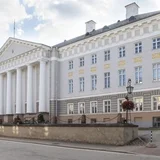
The number of applications from international students is growing again at the University of Tartu, TalTech, and Tallinn University. At the Estonian Academy of Arts, the number of international students has remained stable.
Ülle Tensing, an advisor at the University of Tartu, says the number of international students has declined in recent years. For example, in 2021, there were 1,746 international students at the University of Tartu, but in 2025, there were 1,435. This is 18% fewer than five years ago.
The biggest decline has been in master's programs, where the number of international students decreased by 25%. The number has remained stable in doctoral programs. The decline has been smaller in bachelor's programs.
Tensing says the number of applications from international students is now growing again. In 2025, the number of applications increased by 24%. This year, the growth is 4%. This gives hope that the decline has ended.
The decline in the number of international students has been influenced by several factors. For example, people from many countries find it difficult to obtain a visa for Estonia. There are also fewer scholarships available for master's studies in Estonia than before. Estonia is also not as affordable as it used to be.
According to Tensing, international students have been very pleased with the living environment in Tartu. It is easier to find affordable housing in Tartu than in many other European university cities. Students consider their studies to be worth the money.
Estonia's good international reputation contributes to the growing interest. The University of Tartu collaborates with Study in Estonia and promotes itself at international fairs.
At the Estonian Academy of Arts, the number of international students has grown over the past five years. This year, there are more applicants from the USA and Turkey. The reasons for EKA's popularity are its high international level and good reputation.
At TalTech, the number of international students declined due to the pandemic and geopolitical changes. But now, interest is growing again. In 2026, 1,004 applications were submitted, which is 38% more than the previous year.
The most popular fields at TalTech are cybersecurity, computer science, and artificial intelligence. These are fields where there is high global demand for specialists.
At Tallinn University, the number of applications from international students has increased by 28%. However, visa issues and the cost of living affect how many students ultimately come to study.
Universities collaborate with Study in Estonia to promote Estonia as a good place to study. Estonia's strengths are quality education, a safe environment, and good career opportunities.