
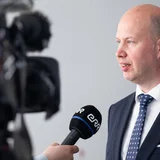
Siseminister Igor Taro (Eesti 200) ütleb, et
vaja on selgeid reegleid
. Need peavad
kaitsma inimeste privaatsust
. Nutiseadmete sisu vaatamine võib riivata eraelu.
vaja on selgeid reegleid
Tõlge fraasile: vaja on selgeid reegleid
EN
clear rules are needed
kaitsma inimeste privaatsust
Tõlge fraasile: kaitsma inimeste privaatsust
EN
protecting people's privacy
Taro ütleb, et
nutiseade sisaldab palju isiklikku teavet
. Näiteks vestlusi, fotosid ja liikumisandmeid. Sellepärast
on vaja kohtu luba
, nagu
eluruumi läbiotsimisel
.
nutiseade sisaldab palju isiklikku teavet
Tõlge fraasile: nutiseade sisaldab palju isiklikku teavet
EN
a smart device contains a lot of personal information
on vaja kohtu luba
Tõlge fraasile: on vaja kohtu luba
EN
a court permit is needed
eluruumi läbiotsimisel
Tõlge fraasile: eluruumi läbiotsimisel
EN
during a house search
Siseministeerium soovitab kasutada samu reegleid, mis kehtivad läbiotsimisel. Kohtu kontroll peaks olema kohustuslik.
Taro rõhutab, et oluline on eristada kahte asja. Esiteks,
andmekandja äravõtmine
. Teiseks,
andmete vaatamine
. Äravõtmine võib jääda uurijate otsustada.
andmekandja äravõtmine
Tõlge fraasile: andmekandja äravõtmine
EN
seizure of the data carrier
andmete vaatamine
Tõlge fraasile: andmete vaatamine
EN
viewing the data
Kui
inimene ise nõus
, võib ta näidata oma andmeid. Näiteks vestlust või fotot. See
ei asenda kohtu luba
, kuid aitab kahtlustusele vastata.
inimene ise nõus
Tõlge fraasile: inimene ise nõus
EN
the person agrees themselves
ei asenda kohtu luba
Tõlge fraasile: ei asenda kohtu luba
EN
does not replace court permission
Siseministeerium ütleb, et
tehnilised piirangud on olulised
. Ei ole võimalik
valida ainult vajalikke andmeid
. Seetõttu tuleb arvestada tegelikkusega.
tehnilised piirangud on olulised
Tõlge fraasile: tehnilised piirangud on olulised
EN
technical limitations are important
valida ainult vajalikke andmeid
Tõlge fraasile: valida ainult vajalikke andmeid
EN
select only necessary data
Justiitsministeerium töötab eelnõu kallal. Selle eesmärk on luua selged reeglid elektrooniliste tõendite kogumiseks. See aitab vältida
tõendite valet kogumist
.
tõendite valet kogumist
Tõlge fraasile: tõendite valet kogumist
EN
incorrect collection of evidence
Interior Minister Igor Taro (Eesti 200) says that clear rules are needed. These must protect people's privacy. Reviewing the content of smart devices may violate private life.
Taro says that a smart device contains a lot of personal information. For example, conversations, photos, and movement data. Therefore, a court warrant is needed, as with a home search.
The Ministry of the Interior recommends using the same rules that apply to searches. Court oversight should be mandatory.
Taro emphasizes that it is important to distinguish between two things. First, the seizure of a data carrier. Second, the review of data. The seizure may be left to the investigators to decide.
If a person consents, they may show their own data. For example, a conversation or photo. This does not replace a court warrant but helps respond to suspicion.
The Ministry of the Interior says that technical limitations are important. It is not possible to select only the necessary data. Therefore, reality must be taken into account.
The Ministry of Justice is working on the draft. Its goal is to establish clear rules for the collection of electronic evidence. This will help avoid improper collection of evidence.