
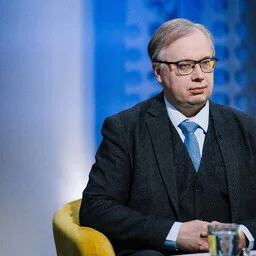
Peeter Luikmel on Eesti Panga ökonomist. Ta räägib Venemaa majandusest.
Venemaal on sõda kalliks läinud
. See tekitab palju probleeme. Üks probleem on tööpuudus.
Venemaal on vähe töötajaid
. See teeb majanduse kasvu raskemaks.
Venemaal on sõda kalliks läinud
Tõlge fraasile: Venemaal on sõda kalliks läinud
EN
The war has become costly for Russia
Venemaal on vähe töötajaid
Tõlge fraasile: Venemaal on vähe töötajaid
EN
There are few workers in Russia
Venemaa keskpank on mures inflatsiooni pärast.
Inflatsioon on kõrge juba aastaid
.
Keskpank langetas intressimäära
21% pealt 15% peale.
Inflatsioon on kõrge juba aastaid
Tõlge fraasile: Inflatsioon on kõrge juba aastaid
EN
Inflation has been high for years
Keskpank langetas intressimäära
Tõlge fraasile: Keskpank langetas intressimäära
EN
The central bank lowered the interest rate
Paljud tööinimesed on Venemaalt lahkunud
. Nad lähevad õppima või muudel põhjustel.
Mobilisatsioon tekitab noortele survet
. Paljud tudengid jäävad välismaale. See ei aita majandusel.
Paljud tööinimesed on Venemaalt lahkunud
Tõlge fraasile: Paljud tööinimesed on Venemaalt lahkunud
EN
Many workers have left Russia
Mobilisatsioon tekitab noortele survet
Tõlge fraasile: Mobilisatsioon tekitab noortele survet
EN
Mobilization puts pressure on young people
Teenindussektoril on suur tööpuudus
. Paljud töökohad täituvad alaealistega.
Madalapalgalisi töökohti on raske täita
.
Palgad tõusevad kiiresti
.
Teenindussektoril on suur tööpuudus
Tõlge fraasile: Teenindussektoril on suur tööpuudus
EN
The service sector has a large labor shortage
Madalapalgalisi töökohti on raske täita
Tõlge fraasile: Madalapalgalisi töökohti on raske täita
EN
Low-wage jobs are hard to fill
Palgad tõusevad kiiresti
Tõlge fraasile: Palgad tõusevad kiiresti
EN
Wages are rising quickly
Ehitussektoril on ka probleeme
. Laenuintressid teevad töö raskemaks. Tööpuudus ja kõrged intressimäärad pärsivad tööd.
Ehitussektoril on ka probleeme
Tõlge fraasile: Ehitussektoril on ka probleeme
EN
The construction sector also has problems
Naftaturg on Venemaale hea.
Venemaa müüb naftat kõrge hinnaga
, eriti Hiinale.
Sanktsioonid ei tööta hästi
. Venemaa leiab alati ostjaid.
Venemaa müüb naftat kõrge hinnaga
Tõlge fraasile: Venemaa müüb naftat kõrge hinnaga
EN
Russia sells oil at a high price
Sanktsioonid ei tööta hästi
Tõlge fraasile: Sanktsioonid ei tööta hästi
EN
Sanctions are not working well
Venemaa majanduse probleemid mõjutavad tavainimesi. Hinnad tõusevad ja elu muutub raskemaks. Paljudel ei ole tööd või on sõjas hukkunud. See pärsib majanduse kasvu.
Rahvusvaheline Valuutafond ütleb, et
Venemaa majandus kasvab 1,1%
. See on väike kasv.
Nafta hind on kõrge
, kuid muud tegurid pärsivad kasvu.
Venemaa majandus kasvab 1,1%
Tõlge fraasile: Venemaa majandus kasvab 1,1%
EN
Russia's economy is growing by 1.1%
Nafta hind on kõrge
Tõlge fraasile: Nafta hind on kõrge
EN
The price of oil is high
Peeter Luikmel is an economist at the Bank of Estonia. He talks about Russia's economy.
The war has become costly for Russia. It creates many problems. One problem is the labor shortage. Russia has few workers. This makes economic growth more difficult.
The Central Bank of Russia is concerned about inflation. Inflation has been high for years. The Central Bank lowered the interest rate from 21% to 15%.
Many workers have left Russia. They go to study or for other reasons. Mobilization creates pressure on young people. Many students stay abroad. This does not help the economy.
The service sector has a significant labor shortage. Many jobs are filled by minors. Low-paying jobs are hard to fill. Wages are rising quickly.
The construction sector also has problems. Loan interest rates make work more difficult. Labor shortages and high interest rates hinder work.
The oil market is good for Russia. Russia sells oil at a high price, especially to China. Sanctions are not working well. Russia always finds buyers.
Russia's economic problems affect ordinary people. Prices are rising and life is becoming harder. Many have no jobs or have died in the war. This hinders economic growth.
The International Monetary Fund says that Russia's economy is growing by 1.1%. This is a small growth. The oil price is high, but other factors hinder growth.