
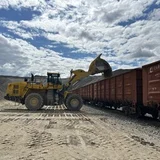
Along with oil shale, limestone is extracted from underground. It has been piled into mountains in Ida-Virumaa. Recently, crushed stone has been produced from limestone. After a testing period, it was found suitable for use in Rail Baltica construction.
Enefit Industry employee Vesta Kõpp said that taxes were adjusted to make transporting crushed stone more affordable. This helps transport the material further. Enefit produces an average of 400,000 tons of crushed stone annually.
Now they are transporting the same quantity to Pärnu for the Rail Baltica project. This doubles their crushed stone production volume.
A two-year contract was signed between Enefit Industry and an international consortium building the Tootsi-Pärnu section. Rail Baltic Estonia employee Lauri Ulm said that a major advantage of the crushed stone is its availability.
He mentioned that the material in Ida-Virumaa is ready for use when needed. This is a good approach for circular economy. It is crucial in large projects where material availability is important.
The future of Rail Baltica remains open. Estonia aims to complete its railway section by 2030. Updates are still awaited from Latvia regarding their plans.