
The Estonian Defense Forces and the University of Tartu signed an agreement. According to the agreement, semioticians will study Russia-China cooperation over three years. They will also examine the role of artificial intelligence in information influence activities. The Defense Forces are supporting this work with €108,000.
Semioticians and the Defense Forces have collaborated for nearly ten years. They analyze disinformation and hostile information influence activities. This helps national defense. The project is led by Professor Andreas Ventsel.
The project investigates how China and Russia use artificial intelligence to disseminate their messages. For example, it is used to intimidate NATO opponents. This could increase tensions and impact Estonia's security.
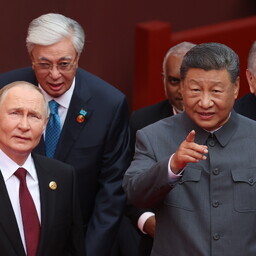
Semioticians seek to clarify why Russia and China publicly showcase their cooperation. Is it for intimidation or to demonstrate deep friendship?
The research employs qualitative methods, such as semiotics and discourse analysis. These help analyze how Russia and China construct their messages. It also examines the text strategies they use.
The collaboration between semiotics and the Defense Forces began in 2018. At that time, they studied the Russian military’s Zapad-2017 exercise. This exercise caused anxiety and fear in the West. The study focused on how such fear is created and how to avoid it.
The Defense Forces and semioticians work together within a broader research framework. The goal is to apply scientific results both in the Defense Forces and the university.
Semioticians from the University of Tartu have also collaborated with the police. For example, in 2004, they studied the ties between the Lihula monument and Nazism. In 2024, an expert assessment was conducted on the Lihula samaba cave. They also analyzed slogans used at pro-Palestine demonstrations.