
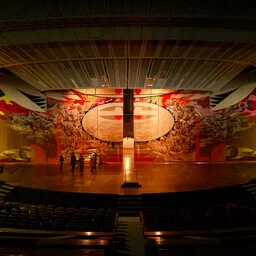
In the Tallinn Linnahall, there is Enn Põldroos's gigantic gobelin. It is very dusty and the seams are coming apart. The city government has included the restoration of the artwork in its plans. Conservators hope that work will begin by summer.
The future of the Linnahall is once again a question. One important question is what will happen to Enn Põldroos's gobelin 'People's Life'. The Heritage Board says that this artwork is the heart of the Linnahall. The piece is large and unique.
The head of the conservation department, Janika Turu, said that concerns about the gobelin have been felt since 2019. The storage conditions are poor and getting worse. Turu said that the artwork requires scientific research and careful approach.
Before restoration, a lot of preparatory work needs to be done. Work is expected to begin in early June. The Linnahall has poor conditions for long-term storage of the gobelin. Humidity is high and mold may start to grow.
The gobelin has sagged and the seams have loosened. There are also some mechanical damages. The conditions in the Linnahall are deteriorating, so action must be taken quickly.
The biggest problem is the risk of mold and dust. Turu said that various cleaning methods will be tried. The gobelin has not been displayed in recent years because the mechanism is broken.
Turu said that digitization is important. It allows the gobelin to be displayed digitally. The City Museum is ready to exhibit the artwork in its storage. However, the most suitable place for the gobelin is still the Linnahall.
Funding for the restoration is expected to come from the Ministry of Culture and the city government. The Ministry of Culture has already prepared the project. The city government understands the importance of the artwork and is ready to protect it.
Janika Turu said that researching the gobelin will take a long time. One student is writing a master's thesis on this topic. The Linnahall stage is large, so the gobelin can be divided into parts and digitized. Digitization is experimental, but plans exist.
After digitization, the gobelin will be moved to the City Museum storage. It will be stored and monitored there. The project is funded by the Ministry of Culture and carried out by various organizations.