
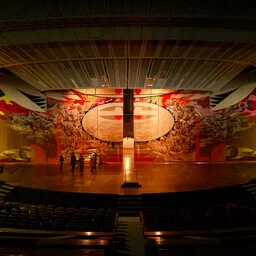
Tallinna linnahallis asub Enn Põldroosi hiiglaslik gobelään. See on väga tolmunud ja õmblustest lahti. Linnavalitsus pani teose restaureerimise oma plaanidesse. Konservaatorid loodavad, et suveks alustatakse töid.
Linnahalli tuleviku küsimus on taas küsimuseks. Üheks oluliseks küsimuseks on, mis saab Enn Põldroosi gobeläänist 'Inimeste elu'. Muinsuskaitseamet ütleb, et see
teos on linnahalli süda
. Teos on suur ja unikaalne.
teos on linnahalli süda
Tõlge fraasile: teos on linnahalli süda
EN
the artwork is the heart of the city hall
Konserveerimisvaldkonna juht Janika Turu rääkis, et gobelääni pärast on muret tuntud alates 2019. aastast. Hoiutingimused on halvad ja muutuvad üha hullemaks. Turu ütles, et teos
vajab teaduslikku uurimist
ja hoolikat lähenemist.
vajab teaduslikku uurimist
Tõlge fraasile: vajab teaduslikku uurimist
EN
requires scientific research
Enne restaureerimist on vaja teha palju eeltööd. Tööd algavad arvatavasti juuni alguses. Linnahallis on gobeläänil pikaajaliseks säilitamiseks kehvad tingimused. Niiskus on kõrge ja hallitus võib kasvama hakata.
Gobelään on vajunud allapoole ja õmblustest lõdvenenud. On ka mõned mehaanilised kahjustused. Linnahalli tingimused halvenevad, mistõttu tuleb kiiresti tegutseda.
Kõige suurem probleem on hallitusoht ja tolm. Turu rääkis, et proovitakse erinevaid puhastusmeetodeid. Gobelääni ei ole viimastel aastatel näidatud, kuna mehhanism on katki.
Turu ütles, et
digiteerimine on oluline
. See võimaldab gobelääni digitaalselt näidata. Linnamuuseum on valmis teost oma hoidlas näitama. Kõige õigem koht gobeläänile on siiski linnahall.
digiteerimine on oluline
Tõlge fraasile: digiteerimine on oluline
EN
digitization is important
Raha restaureerimiseks peaks tulema
kultuuriministeerium
ilt ja linnavalitsuselt. Kultuuriministeerium on juba valmistanud projekti ette. Linnavalitsus mõistab teose tähtsust ja on valmis seda kaitsma.
kultuuriministeerium
Tõlge fraasile: kultuuriministeerium
EN
Ministry of Culture
Janika Turu rääkis, et gobelääni uurimine võtab kaua aega. Üks tudeng teeb sellel teemal magistritöö. Linnahalli lava on suur, mistõttu
gobelään saab osadeks jagada
ja neid digiteerida. Digiteerimine on eksperimentaalne, kuid plaanid on olemas.
gobelään saab osadeks jagada
Tõlge fraasile: gobelään saab osadeks jagada
EN
the tapestry can be divided into parts
Pärast digiteerimist viiakse gobelään linnamuuseumi hoidlasse. Seal säilitatakse ja jälgitakse seda. Projekti rahastab
kultuuriministeerium
ja teostavad seda erinevad organisatsioonid.
kultuuriministeerium
Tõlge fraasile: kultuuriministeerium
EN
Ministry of Culture
In the Tallinn Linnahall, there is Enn Põldroos's gigantic gobelin. It is very dusty and the seams are coming apart. The city government has included the restoration of the artwork in its plans. Conservators hope that work will begin by summer.
The future of the Linnahall is once again a question. One important question is what will happen to Enn Põldroos's gobelin 'People's Life'. The Heritage Board says that this artwork is the heart of the Linnahall. The piece is large and unique.
The head of the conservation department, Janika Turu, said that concerns about the gobelin have been felt since 2019. The storage conditions are poor and getting worse. Turu said that the artwork requires scientific research and careful approach.
Before restoration, a lot of preparatory work needs to be done. Work is expected to begin in early June. The Linnahall has poor conditions for long-term storage of the gobelin. Humidity is high and mold may start to grow.
The gobelin has sagged and the seams have loosened. There are also some mechanical damages. The conditions in the Linnahall are deteriorating, so action must be taken quickly.
The biggest problem is the risk of mold and dust. Turu said that various cleaning methods will be tried. The gobelin has not been displayed in recent years because the mechanism is broken.
Turu said that digitization is important. It allows the gobelin to be displayed digitally. The City Museum is ready to exhibit the artwork in its storage. However, the most suitable place for the gobelin is still the Linnahall.
Funding for the restoration is expected to come from the Ministry of Culture and the city government. The Ministry of Culture has already prepared the project. The city government understands the importance of the artwork and is ready to protect it.
Janika Turu said that researching the gobelin will take a long time. One student is writing a master's thesis on this topic. The Linnahall stage is large, so the gobelin can be divided into parts and digitized. Digitization is experimental, but plans exist.
After digitization, the gobelin will be moved to the City Museum storage. It will be stored and monitored there. The project is funded by the Ministry of Culture and carried out by various organizations.