
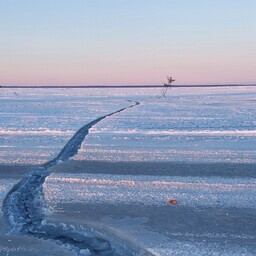
Läänemeres on jääkate kiiresti vähenenud
.
Läänemeres on jääkate kiiresti vähenenud
Tõlge fraasile: Läänemeres on jääkate kiiresti vähenenud
EN
The ice cover in the Baltic Sea has rapidly decreased
Praegu on jääkate suurus 140 000 ruutkilomeetrit
.
Praegu on jääkate suurus 140 000 ruutkilomeetrit
Tõlge fraasile: Praegu on jääkate suurus 140 000 ruutkilomeetrit
EN
Currently, the ice cover is 140,000 square kilometers
Varem on see olnud suurusega 180 000 ruutkilomeetrit
.
Varem on see olnud suurusega 180 000 ruutkilomeetrit
Tõlge fraasile: Varem on see olnud suurusega 180 000 ruutkilomeetrit
EN
Previously, it has been 180,000 square kilometers
TTÜ professor Rivo Uiboupin selgitas seda
.
TTÜ professor Rivo Uiboupin selgitas seda
Tõlge fraasile: TTÜ professor Rivo Uiboupin selgitas seda
EN
TTÜ professor Rivo Uiboupin explained this
Prognoosi järgi Väinameres on veel jää ka lähipäevil
.
Prognoosi järgi Väinameres on veel jää ka lähipäevil
Tõlge fraasile: Prognoosi järgi Väinameres on veel jää ka lähipäevil
EN
According to the forecast, there will still be ice in Väinameri in the coming days
Liivi ja Soome lahes liigub jää tuulte tõttu ringi.
Uiboupin ütles, et jääd ei teki enam palju.
Talve tipp on möödas
.
Talve tipp on möödas
Tõlge fraasile: Talve tipp on möödas
EN
The peak of winter has passed
Jää ulatuse maksimum saavutatakse Läänemeres veebruari lõpus
.
Jää ulatuse maksimum saavutatakse Läänemeres veebruari lõpus
Tõlge fraasile: Jää ulatuse maksimum saavutatakse Läänemeres veebruari lõpus
EN
The maximum extent of ice is reached in the Baltic Sea at the end of February
Edela ja lõunakaare tuuled puhuvad lähipäevil.
See põhjustab jää lagunemist mitmes kohas.
Saaremaa-Hiiumaa jäätee lähedal on avatud vesi
.
Saaremaa-Hiiumaa jäätee lähedal on avatud vesi
Tõlge fraasile: Saaremaa-Hiiumaa jäätee lähedal on avatud vesi
EN
There is open water near the Saaremaa-Hiiumaa ice road
See on viie kilomeetri kaugusel
.
See on viie kilomeetri kaugusel
Tõlge fraasile: See on viie kilomeetri kaugusel
EN
It is five kilometers away
Jääkattele võib koguneda veekiht.
Edela tuuled ja veetaseme tõus Eesti rannikul põhjustavad seda.
Väinameres on veetase tõusnud 30–40 cm viimase kümne päeva jooksul
.
Väinameres on veetase tõusnud 30–40 cm viimase kümne päeva jooksul
Tõlge fraasile: Väinameres on veetase tõusnud 30–40 cm viimase kümne päeva jooksul
EN
The water level in Väinameri has risen by 30–40 cm over the last ten days
Satelliitpiltidel näidatakse Läänemere jääolude kaardistust
.
Satelliitpiltidel näidatakse Läänemere jääolude kaardistust
Tõlge fraasile: Satelliitpiltidel näidatakse Läänemere jääolude kaardistust
EN
Satellite images show the mapping of ice conditions in the Baltic Sea
Tänavune talv on olnud jäärohkem kui viimase 30 aasta keskmine
.
Tänavune talv on olnud jäärohkem kui viimase 30 aasta keskmine
Tõlge fraasile: Tänavune talv on olnud jäärohkem kui viimase 30 aasta keskmine
EN
This winter has been icier than the average of the last 30 years
2010/2011 talvel oli jääd veel rohkem.
See aasta ei olnud ekstreemne, vaid üle keskmise.
Talv oli huvitav, sest jää tekkis alles jaanuari alguses.
TTÜ jääolude prognoos näitab jää kontsentratsiooni ja triivkiirust
.
TTÜ jääolude prognoos näitab jää kontsentratsiooni ja triivkiirust
Tõlge fraasile: TTÜ jääolude prognoos näitab jää kontsentratsiooni ja triivkiirust
EN
The TTÜ ice conditions forecast shows ice concentration and drift speed
Prognoos uueneb iga päev
.
Prognoos uueneb iga päev
Tõlge fraasile: Prognoos uueneb iga päev
EN
The forecast is updated every day
Mudeli täpsus on erinevates ilmastiuoludes varieeruv
.
Mudeli täpsus on erinevates ilmastiuoludes varieeruv
Tõlge fraasile: Mudeli täpsus on erinevates ilmastiuoludes varieeruv
EN
The accuracy of the model varies in different weather conditions
Mudel on TTÜ meresüsteemide instituudi loodud.
Projekt DTO4OWE on mudeli allikas.
The ice cover in the Baltic Sea has decreased rapidly.
Currently, the ice cover size is 140,000 square kilometers.
Previously, it has been 180,000 square kilometers.
TTÜ Professor Rivo Uiboupin explained this.
According to the forecast, there will still be ice in Väinameri in the coming days.
In the Gulf of Riga and the Gulf of Finland, the ice moves around due to the winds.
Uiboupin stated that not much ice is forming anymore.
The peak of winter has passed.
The maximum ice extent in the Baltic Sea will be reached at the end of February.
Southwest and southeast winds will blow in the coming days.
This causes the ice to break up in several places.
There is open water near the Saaremaa-Hiiumaa ice road.
It is five kilometers away.
A layer of water may accumulate on the ice cover.
Southwest winds and rising water levels on the Estonian coast cause this.
In Väinameri, the water level has risen by 30–40 cm in the last ten days.
Satellite images show the mapping of ice conditions in the Baltic Sea.
This winter has been icier than the average of the last 30 years.
In the winter of 2010/2011, there was even more ice.
This year was not extreme but above average.
The winter was interesting because the ice only formed at the beginning of January.
The TTÜ ice condition forecast shows ice concentration and drift speed.
The forecast is updated daily.
The accuracy of the model varies in different weather conditions.
The model was created by the TTÜ Marine Systems Institute.
The DTO4OWE project is the source of the model.