
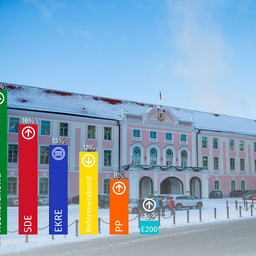
In February, 24% of people supported Isamaa. In January, Isamaa's rating was 26%. In December, it was 24%. Over the past six months, Isamaa's rating has been similar.
The Center Party's support was 21% in February. In January, it was 23%. The difference between Isamaa and the Center Party is three percent.
The Social Democratic Party (SDE) is in third place with 16% support. In January, SDE's support was 14%, in December 15%. SDE increased its lead over EKRE and the Reform Party.
EKRE's support was 13% in February, while the Reform Party's support was 12%. In January, the Reform Party's support was 13%.
The Conservative People's Party (Parempoolsed) had 8% support in February. In January, their support was 7%. Eesti 200's support was 2% in February.
The Greens and Koost were supported by 1% of people. ERK's support was below 1%.
Eesti 200 and other smaller parties are below the electoral threshold.
In February, 25% of respondents could not say who they support. In January, this figure was 23%.
Among Estonian respondents, 28% supported Isamaa. SDE was supported by 17%, EKRE by 15%, the Reform Party by 14%, the Center Party by 12%, and Parempoolsed by 10%.
Among Russian voters, the Center Party is the most popular. Its support among them was 70%. SDE was supported by 7%, Isamaa and EKRE by 6%.
In Tallinn, the Center Party is the most popular with 33% support. SDE was supported by 19%, Isamaa by 14%, the Reform Party by 12%, and Parempoolsed by 11%. EKRE's support was 6%, Eesti 200's support 2%.
In Ida-Viru County, the Center Party is the most popular. In other regions, Isamaa is the most popular.
Among younger people (18-24 and 25-34 years old), SDE is the most popular party. Among 35-44-year-olds, Isamaa and the Center Party are popular. Among 50-64-year-olds, Isamaa is the most popular. The Center Party is the most popular among those aged 75 and older.
EKRE and Parempoolsed have more male voters. Among Center Party and SDE voters, there are more women. Among Isamaa, Reform Party, and Eesti 200 voters, men and women are equally represented.
Kantar Emor surveyed people online and by phone from February 11 to 18. The margin of error is ±2.1%.