
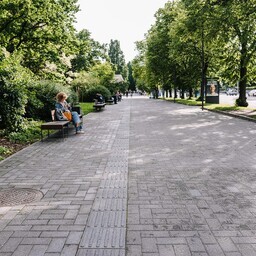
Landscape architect Kristiina Kupper explored in her PhD thesis how to better plan public spaces in cities. She found that mistakes are often made already during the planning phase. These errors have to be corrected later during maintenance.
Kupper recommends using more historical data and digital twins. A digital twin is a computer model of a city where different solutions can be tested. This helps avoid mistakes and create better public spaces.
According to her, the biggest problems in Estonian cities are rapid urbanization, aging population, and climate change. Additionally, green spaces are fragmented, which is not good for nature.
Kupper gives the example of planting trees. If a tree is not given enough space, it cannot grow properly. This shows that planning needs to think long-term.
A digital twin allows us to see how urban spaces change over the years. For example, one can observe how trees grow or how weather affects spaces. This helps in making better decisions.
In Tallinn, digital twins of buildings already exist. Now, work is being done on tree models. This will help better care for existing trees.
Kupper also studied the centers of 10 Estonian cities. She found that many spaces are not comfortable for older people. For example, pavements are too rough or there are not enough benches.
She recommends city planners to think about everyone. For example, benches should be comfortable and toilets easily accessible. Universal design can help create spaces that suit everyone.
Kupper defended her PhD thesis on January 15th at Tallinn University of Technology. Her work helps improve urban life.