
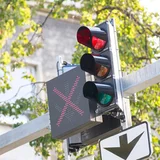
According to the study, 58% of drivers ignored yellow traffic lights. Red lights were ignored by 9% of drivers.
Yellow lights were most commonly ignored at the Sõpruse-Tammsaare and Sõpruse-Sütiste-Keskuse intersections in Tallinn, where 86% and 82% of drivers, respectively, ignored them.
Red lights were most commonly ignored in Pärnu at the Tallinna-Pärnu-Ikla and Pärnu-Lihula road intersections, where 38% of drivers ignored them. In Tallinn, red lights were ignored by 7-20% of drivers.
At some intersections, no one ignored red lights. At others, only one driver ignored them.
A driver was considered to have ignored a traffic light if they did not stop when they could have. The study also examined how often drivers had the opportunity to ignore traffic lights.
On Sõpruse puiestee in Tallinn, yellow lights were ignored in 96% of cycles. Red lights were ignored there in 4% of cases. In other locations, yellow lights were ignored in 28-84% of cycles.
Red lights were most commonly ignored in Tartu at the Narva maantee pedestrian crossing and in Pärnu (both at 17% of cycles). These were followed by the Laagna-Vilmsi (14%) and Paldiski-Sõle (12%) intersections in Tallinn.
The proportion of red-light violators was similar everywhere. For yellow lights, the results in Tallinn were twice as bad as elsewhere.
Data from previous years shows that yellow lights are more commonly obeyed elsewhere. In Tallinn, compliance has decreased. Changes regarding red lights have been minor.
The study was conducted in the autumn of 2023. The behavior of pedestrians and railway crossings was also examined.