
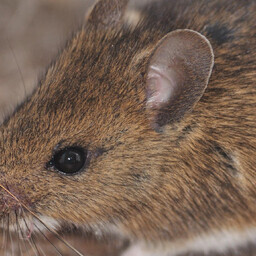
Hiir on väike loom
, mida sageli raske täpselt ära tunda.
Eestis on umbes 20 hiire liiki
. Neist viis liiki võib tuppa jooksu saada. Rotte on Eestis kaks liiki: rändrott ja kodurott.
Hiir on väike loom
Tõlge fraasile: Hiir on väike loom
EN
A mouse is a small animal
Eestis on umbes 20 hiire liiki
Tõlge fraasile: Eestis on umbes 20 hiire liiki
EN
There are about 20 species of mice in Estonia
Rotid on hiirtest palju suuremad
. Täiskasvanud hiir on suuruse poolest nagu suur liimpulk.
Täiskasvanud rott on suurem
, umbes 0,5-liitrise pudeli suurune. Suurus aitab neid eristada.
Rotid on hiirtest palju suuremad
Tõlge fraasile: Rotid on hiirtest palju suuremad
EN
Rats are much larger than mice
Täiskasvanud rott on suurem
Tõlge fraasile: Täiskasvanud rott on suurem
EN
An adult rat is larger
Kui loomi näha ei ole, saab neid ära tunda ka nende väljaheidete järgi. Hiire väljaheide on väiksem kui üks sentimeeter. Roti omad on suuremad kui sentimeeter.
Hiired ja rotid ei ela tavaliselt samas majas
. Ratt on suurem ja tugevam, ajab hiired eemale ja võib neid rünnata.
Hiired ja rotid ei ela tavaliselt samas majas
Tõlge fraasile: Hiired ja rotid ei ela tavaliselt samas majas
EN
Mice and rats usually do not live in the same house
Kui hiiri enam mürgitada ei tohi, saab kasutada muid meetodeid. Esmalt tuleks talveks kontrollida, et majal ei ole auke või pragusid, mille kaudu hiired sisse pääsevad. Teiseks tuleks hoida toitu korras, et loomad ei tuleks ligi.
Hiirtega võitlemiseks saab kasutada lõkse
. Kui kasutatakse eluslõksu, tuleks loom viia kaugemale, et ta tagasi ei tuleks. Pärast lõkse tuleb käsi hoolikalt pesta, sest loomad võivad kanda viiruseid.
Hiirtega võitlemiseks saab kasutada lõkse
Tõlge fraasile: Hiirtega võitlemiseks saab kasutada lõkse
EN
Traps can be used to fight mice
Hea abivõimalus hiirte vastu on kass
.
Samuti ei meeldi hiirtele tugevad lõhnad
nagu piparmünt, kaneel, eukalüpt ja tsitruselised.
Hea abivõimalus hiirte vastu on kass
Tõlge fraasile: Hea abivõimalus hiirte vastu on kass
EN
A cat is a good solution against mice
Samuti ei meeldi hiirtele tugevad lõhnad
Tõlge fraasile: Samuti ei meeldi hiirtele tugevad lõhnad
EN
Mice also dislike strong smells
Zooloog Joosep Sarapuu ei soovita mürgitamist. See võib olla ohtlik nii inimestele kui ka teistele loomadele.
Mürgitatud loom võib hukkuda raskesti ligipääsetavas kohas
ja tekitada ebameeldiva haisu.
Mürgitatud loom võib hukkuda raskesti ligipääsetavas kohas
Tõlge fraasile: Mürgitatud loom võib hukkuda raskesti ligipääsetavas kohas
EN
A poisoned animal may die in a hard-to-reach place
A mouse is a small animal that is often difficult to identify precisely. There are about 20 species of mice in Estonia. Five of these species may enter homes. There are two species of rats in Estonia: the brown rat and the black rat.
Rats are much larger than mice. An adult mouse is about the size of a large glue stick. An adult rat is larger, about the size of a 0.5-liter bottle. Size helps to distinguish them.
If the animals are not visible, they can also be identified by their droppings. Mouse droppings are smaller than one centimeter. Rat droppings are larger than a centimeter.
Mice and rats usually do not live in the same house. The rat is larger and stronger, drives mice away, and may attack them.
If mice can no longer be poisoned, other methods can be used. First, before winter, check that the house has no holes or cracks through which mice can enter. Second, keep food properly stored so that animals are not attracted.
Traps can be used to combat mice. If a live trap is used, the animal should be taken far away so it does not return. After handling traps, hands should be washed thoroughly, as animals may carry viruses.
A good solution against mice is a cat. Mice also dislike strong smells such as peppermint, cinnamon, eucalyptus, and citrus.
Zoologist Joosep Sarapuu does not recommend poisoning. It can be dangerous to both humans and other animals. A poisoned animal may die in a hard-to-reach place and create an unpleasant odor.