
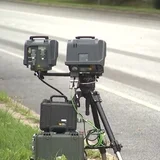
Laupäeval hakkas kehtima uus seadus. See ütleb, et politsei peab panema märgi mobiilse kiiruskaamera ette.
Märk annab juhtidele teada, et kiirust mõõdetakse
.
Märk annab juhtidele teada, et kiirust mõõdetakse
Tõlge fraasile: Märk annab juhtidele teada, et kiirust mõõdetakse
EN
The sign informs drivers that speed is being measured
Märk peab olema nähtav
.
Asulas peab see olema 150 kuni 300 meetrit enne kaamerat
.
Maanteel peab see olema 300 kuni 500 meetrit enne kaamerat
.
Märk peab olema nähtav
Tõlge fraasile: Märk peab olema nähtav
EN
The sign must be visible
Asulas peab see olema 150 kuni 300 meetrit enne kaamerat
Tõlge fraasile: Asulas peab see olema 150 kuni 300 meetrit enne kaamerat
EN
In a settlement, it must be 150 to 300 meters before the camera
Maanteel peab see olema 300 kuni 500 meetrit enne kaamerat
Tõlge fraasile: Maanteel peab see olema 300 kuni 500 meetrit enne kaamerat
EN
On a highway, it must be 300 to 500 meters before the camera
Politsei paneb märgi üles ja kirjutab selle asukoha üles. Aga politsei ei saa alati jälgida, kas märk seisab paigal. Näiteks tuul võib märgi ümber lükata. Politsei ütleb, et trahv tuleb maksta ka siis, kui märk on maha lükatud.
Siseministeerium ei ole politseiga täiesti nõus
. Kuni kohtus otsustatakse, on võimalik palju vaidlusi.
Kohtus peavad mõlemad pooled tõestama, et neil on õigus
.
Siseministeerium ei ole politseiga täiesti nõus
Tõlge fraasile: Siseministeerium ei ole politseiga täiesti nõus
EN
The Ministry of the Interior does not fully agree with the police
Kohtus peavad mõlemad pooled tõestama, et neil on õigus
Tõlge fraasile: Kohtus peavad mõlemad pooled tõestama, et neil on õigus
EN
In court, both parties must prove that they are right
Advokaat Indrek Sirk ütleb, et politsei peaks märkidele paremini jälge pidama. Ta ütleb ka, et kiirust peaks mõõtma lühikest aega. Sirk ei arva, et uus seadus on kasulik. Ta ütleb, et see takistab politsei tööd.
Sellel aastal on keegi rikkunud mobiilseid kiiruskaameraid kolm korda. Iga katki kaamera remont maksab 20 000 eurot. Praegu on üks kaheksast kaamerast remondi käigus Saksamaal.
The new law came into effect on Saturday. It states that the police must place a sign in front of a mobile speed camera. The sign informs drivers that speed is being measured.
The sign must be visible. In urban areas, it must be placed 150 to 300 meters before the camera. On highways, it must be placed 300 to 500 meters before the camera.
The police will set up the sign and record its location. However, the police cannot always monitor whether the sign remains in place. For example, wind may knock it over. The police say that fines must be paid even if the sign is knocked down.
The Ministry of Internal Affairs does not fully agree with the police. Until the court decides, many disputes are possible. In court, both parties must prove that they are right.
Lawyer Indrek Sirk says that the police should better track the signs. He also says that speed should be measured for a short period. Sirk does not think the new law is beneficial. He says it hinders police work.
This year, someone has damaged mobile speed cameras three times. Each damaged camera repair costs €20,000. Currently, one of the eight cameras is being repaired in Germany.