
Inimõiguste Instituut
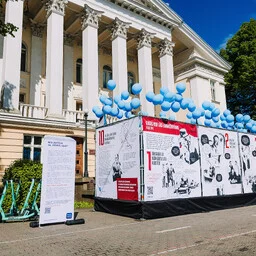
on toonud "
Pisarate vagun
i" Tallinna avalikku ruumi. See on seal olnud alates 2013. aastast. Näitus aitab meenutada juuniküüditamist ja selle ohvreid.
Inimõiguste Instituut
Tõlge fraasile: Inimõiguste Instituut
EN
Human Rights Institute
Pisarate vagun
Tõlge fraasile: Pisarate vagun
EN
Wagon of Tears
2024. aastal lisati näitusele
Veiko Tammjärve graafiline lugu
. See aitab paremini mõista, kuidas küüditamine toimus. Pildid on lihtsamad kui pikad ajalootekstid.
Veiko Tammjärve graafiline lugu
Tõlge fraasile: Veiko Tammjärve graafiline lugu
EN
Veiko Tammjärv's graphic story
Pühapäeval mälestatakse juuniküüditamise ohvreid. Seda tehakse mitmes Eesti linnas. 1941. aastal küüditas
Nõukogude võim
Eestist Siberisse umbes 10 000 inimest. Nende hulgas olid naised, lapsed ja vanurid.
Nõukogude võim
Tõlge fraasile: Nõukogude võim
EN
Soviet regime
Välisministeerium ütleb, et Venemaa kasutab samu meetodeid ka tänapäeval. Ukraina sõjas on Venemaa viinud ära üle 20 000 lapse. Need
lapsed on kaotanud oma kodu ja pere
.
lapsed on kaotanud oma kodu ja pere
Tõlge fraasile: lapsed on kaotanud oma kodu ja pere
EN
children have lost their home and family
Eesti tahab, et kõik küüditatud lapsed saaksid koju tagasi. Samuti peavad kurjategijad vastutama oma tegude eest. Ainult nii saab
vältida uusi tragöödiaid
.
vältida uusi tragöödiaid
Tõlge fraasile: vältida uusi tragöödiaid
EN
prevent new tragedies
The Human Rights Institute has brought the "Tears Wagon" to Tallinn's public space. It has been there since 2013. The exhibition helps remember the June deportations and their victims.
In 2024, Veiko Tammjärv's graphic story was added to the exhibition. It helps better understand how the deportation took place. Pictures are simpler than long historical texts.
On Sunday, the victims of the June deportations are commemorated. This is done in several Estonian cities. In 1941, the Soviet authorities deported about 10,000 people from Estonia to Siberia. Among them were women, children, and the elderly.
The Ministry of Foreign Affairs says that Russia uses the same methods today. In the war in Ukraine, Russia has taken away over 20,000 children. These children have lost their home and family.
Estonia wants all deported children to return home. Also, the criminals must answer for their actions. Only this way can new tragedies be avoided.