
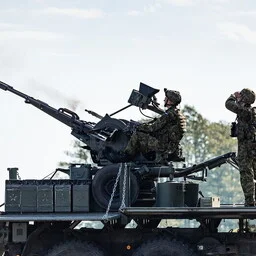
Peaminister Kristen Michal ütles, et Eesti õhukaitse muutub lähiaastatel mitmekihiliseks.
Riik investeerib droonitõrjesse
üle 200 miljoni euro. Luuakse ka kaitseväes õhukaitsebrigaad.
Riik investeerib droonitõrjesse
Tõlge fraasile: Riik investeerib droonitõrjesse
EN
The state will invest in drone defense
Idapiirile rajatakse droonituvastuse ja -tõrjepositsioon. Selleks kulub umbes viis miljonit eurot.
Ukraina kogemuse järgi luuakse droonitõrje - ja seiresüsteem. See hõlmab idapiiri ja nelja suurt linna.
Plaan on investeerida droonitõrje süsteemi üle 20 miljoni euro.
Süsteem peaks tööle hakkama hiljemalt 2027. aastal
.
Süsteem peaks tööle hakkama hiljemalt 2027. aastal
Tõlge fraasile: Süsteem peaks tööle hakkama hiljemalt 2027. aastal
EN
The system should be operational by 2027 at the latest
Kihilise õhukaitse jaoks luuakse õhukaitsebrigaad.
Lähiaastatel saab Eestisse IRIS-T õhutõrjesüsteemid
. Lisanduvad ka Mistral ja Piorun rakettide lisatarned.
Lähiaastatel saab Eestisse IRIS-T õhutõrjesüsteemid
Tõlge fraasile: Lähiaastatel saab Eestisse IRIS-T õhutõrjesüsteemid
EN
In the coming years, Estonia will receive IRIS-T air defense systems
Järgmiseks neljaks aastaks on kavandatud investeerida ligi 364 miljonit eurot droonivõimekuse suurendamiseks.
214 miljonit suunatakse drooniseiresüsteemide hankimiseks. Ülejäänu kasutatakse ründevõimekuse arendamiseks.
Praegu kasutab kaitseväe droonide avastamiseks kuulipildujaid
ja õhutõrjekahureid.
Praegu kasutab kaitseväe droonide avastamiseks kuulipildujaid
Tõlge fraasile: Praegu kasutab kaitseväe droonide avastamiseks kuulipildujaid
EN
Currently, the defense forces use machine guns to detect drones
Rahuajal hoiab Eesti inimeste elu häirimata droonide tõrjumisel
.
Rahuajal hoiab Eesti inimeste elu häirimata droonide tõrjumisel
Tõlge fraasile: Rahuajal hoiab Eesti inimeste elu häirimata droonide tõrjumisel
EN
In peacetime, Estonia ensures that people's lives are not disrupted by drone defense
Droonide tõrjumise vahendid ei tohiks kahjustada inimesi.
Rahuajal ei lasta piiri ääres naaberriigi suunas sõjarelvi.
Sõja tingimustes kehtivad teistsugused reeglid.
Eesti õhuruumi kaitset jälgivad NATO hävituslennukid
.
Eesti õhuruumi kaitset jälgivad NATO hävituslennukid
Tõlge fraasile: Eesti õhuruumi kaitset jälgivad NATO hävituslennukid
EN
Estonia's airspace protection is monitored by NATO fighter jets
Kaitsevähk ja PPA jälgivad õhuruumi radarite abil.
Praegu puudub Eestile vahetu sõjaline oht
.
Praegu puudub Eestile vahetu sõjaline oht
Tõlge fraasile: Praegu puudub Eestile vahetu sõjaline oht
EN
Currently, there is no immediate military threat to Estonia
Eestisse satuvad droonid on Ukraina sõja kõrvalmõjud
.
Eestisse satuvad droonid on Ukraina sõja kõrvalmõjud
Tõlge fraasile: Eestisse satuvad droonid on Ukraina sõja kõrvalmõjud
EN
Drones entering Estonia are side effects of the war in Ukraine
27. märtsil saadeti eelnõu kooskõlastamisele. Sellega laiendatakse droonide seire- ja tõrjevõimalusi.
Prime Minister Kristen Michal stated that Estonia's air defense will become multi-layered in the coming years.
The state will invest over 200 million euros in drone defense. An air defense brigade will also be established in the defense forces.
Drone detection and defense positions will be built on the eastern border. This will cost approximately five million euros.
Based on Ukraine's experience, a drone defense and monitoring system will be created. This will cover the eastern border and four major cities.
The plan is to invest over 20 million euros in drone defense systems.
The system is expected to be operational by 2027 at the latest.
An air defense brigade will be established for multi-layered air defense.
In the coming years, Estonia will receive IRIS-T air defense systems. Additional deliveries of Mistral and Piorun missiles will also be included.
Over the next four years, nearly 364 million euros are planned to be invested in enhancing drone capabilities.
214 million will be allocated for acquiring drone monitoring systems. The remainder will be used to develop offensive capabilities.
Currently, the defense forces use machine guns and anti-aircraft artillery to detect drones.
During peacetime, Estonia ensures that people's lives remain undisturbed while countering drones.
Means of countering drones should not harm people.
During peacetime, weapons will not be fired towards neighboring countries near the border.
Different rules apply in wartime.
NATO fighter jets monitor Estonia's airspace.
The Defense League and PPA monitor airspace using radars.
Currently, there is no immediate military threat to Estonia.
The drones reaching Estonia are side effects of the war in Ukraine.
On March 27, the draft proposal was sent for coordination. This will expand drone monitoring and defense capabilities.