
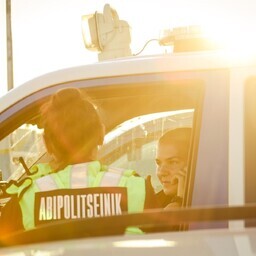
Uus seadus plaanib anda abipolitseinikele rohkem õigusi. Teise ja kolmanda astme
abipolitseinikud
saavad õiguse
peatada sõidukeid
ka
eravärvides auto
st. Praegu saavad nad seda teha ainult politseiametnikuga koos.
abipolitseinikud
Tõlge fraasile: abipolitseinikud
EN
auxiliary police officers
peatada sõidukeid
Tõlge fraasile: peatada sõidukeid
EN
stop vehicles
eravärvides auto
Tõlge fraasile: eravärvides auto
EN
unmarked car
Siseministeerium tahab abipolitseinikke paremini
välja õpetada
. Nad saavad õiguse
erandjuhul
peatada sõidukeid
. See õigus kehtib ka siis, kui nad ei kanna
vormiriietus
t ja politseiametnik ei ole kohal. Kuid kõik
abipolitseinikud
ei hakka seda võimalust kasutama.
välja õpetada
Tõlge fraasile: välja õpetada
EN
train
erandjuhul
Tõlge fraasile: erandjuhul
EN
in exceptional cases
peatada sõidukeid
Tõlge fraasile: peatada sõidukeid
EN
stop vehicles
vormiriietus
Tõlge fraasile: vormiriietus
EN
uniform
abipolitseinikud
Tõlge fraasile: abipolitseinikud
EN
auxiliary police officers
Politsei teeb tavaliselt
liiklusjärelevalve
t politseivärvides autoga. Kuid seadus lubab teha ka
varjatud järelevalve
t
eravärvides auto
ga. Näiteks võib politsei jälgida, kas keegi räägib telefoni autos. Kui keegi
rikub seadust
, peatab politsei ta.
liiklusjärelevalve
Tõlge fraasile: liiklusjärelevalve
EN
traffic supervision
varjatud järelevalve
Tõlge fraasile: varjatud järelevalve
EN
undercover surveillance
eravärvides auto
Tõlge fraasile: eravärvides auto
EN
unmarked car
rikub seadust
Tõlge fraasile: rikub seadust
EN
violates the law
Praegu on Eestis ligi 1300 abipolitseinikku. Neist umbes 300 saavad
iseseisvalt tegutseda
. Uus seadus annab neile õiguse
määrata inimese joovet
täpsema alkomeetriga. Praegu puudub neil selline õigus.
iseseisvalt tegutseda
Tõlge fraasile: iseseisvalt tegutseda
EN
act independently
määrata inimese joovet
Tõlge fraasile: määrata inimese joovet
EN
determine a person's intoxication
Abipolitseinikud saavad rohkem haridust ja praktikat. Nad saavad teadmisi ja oskusi.
Sisekaitseakadeemia
hakkab neid õpetama. Praegu kestab abipolitseiniku esmane õpe kuni 40 tundi.
Sisekaitseakadeemia
Tõlge fraasile: Sisekaitseakadeemia
EN
Academy of Internal Defense
Siseministeerium saatis
seaduseelnõu
ringile juba septembris. Justiitsministeerium ei olnud sellega nõus. Nad leidsid, et seadus sekab liiga palju inimeste privaatsesse ellu. Nad soovivad, et uus seadus arvaks nende mureid.
seaduseelnõu
Tõlge fraasile: seaduseelnõu
EN
draft law
The new law plans to grant assistant police officers more rights. Second and third-level assistant police officers will gain the right to stop vehicles even in civilian-colored cars. Currently, they can only do this together with a police officer.
The Ministry of the Interior wants to better train assistant police officers. They will gain the right to stop vehicles in exceptional cases. This right applies even if they are not wearing uniforms and a police officer is not present. However, not all assistant police officers will use this opportunity.
The police usually conduct traffic surveillance in police-colored cars. However, the law also allows for covert surveillance in civilian-colored cars. For example, the police may monitor whether someone is talking on the phone while driving. If someone violates the law, the police will stop them.
Currently, there are nearly 1300 assistant police officers in Estonia. About 300 of them can operate independently. The new law gives them the right to determine a person's intoxication with a more precise breathalyzer. Currently, they lack such a right.
Assistant police officers will receive more education and practical experience. They will gain knowledge and skills. The Internal Security Academy will start training them. Currently, the primary training of an assistant police officer lasts up to 40 hours.
The Ministry of the Interior sent the draft law for review already in September. The Ministry of Justice did not agree with it. They found that the law interferes too much with people's private lives. They want the new law to take their concerns into account.