
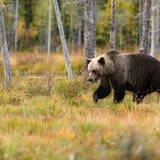
Viimastel nädalatel on räägitud karudest, kes külastanud inimeste koduhoove. Keskkonnaamet on andnud loa kahe karu küttimiseks, sest nad tulid koduõuedele, kuigi neid peletati metsa.
Peep Männil, keskkonnaagentuuri ulukite spetsialist, ütles, et karujaht ei sõltu enam karude arvukusest, nagu teiste loomade puhul. See on sellepärast, et
Euroopa Liidu loodusdirektiiv
kaitseb karusid rangelt.
Euroopa Liidu loodusdirektiiv
Tõlge fraasile: Euroopa Liidu loodusdirektiiv
EN
European Union nature directive
Kohtuotsuste tõttu ei saa karusid palju kütata. Näiteks eelmisel aastal kütiti vaid 32 karu, kuigi aasta varem kütiti 101. See aasta ei tohi küttida palju rohkem.
Männil ütles, et karude arvukus looduses lakkaks kasvamast, kui hooajal kütitakse vähemalt 150 karu. Eelmisel aastal hinnati, et Eestis on vähemalt 1100 karu. Tõenäoliselt on arvukus ka sel aastal kasvanud.
Keskkonnaagentuur kogub andmeid jahimeestelt ja analüüsib neid. Nad hindavad karude arvukust väga hoolikalt, kuid võib olla väike viga.
Marko Vinni, Eesti jahimeeste seltsi nõunik, ütles, et karude arvukus kasvab igal aastal, sest karujaht on raskendatud. Ta arvab, et looduses võib olla kuni 1500 karu. See ei ole üle pakutud, sest igal aastal sünnib palju karupoegi.
In recent weeks, there has been talk of bears visiting people's home yards. The Environment Agency has issued a permit to hunt two bears because they came to home yards despite being driven back into the forest.
Peep Männil, a wildlife specialist at the Environment Agency, said that bear hunting no longer depends on bear numbers, as is the case with other animals. This is because the European Union's Nature Directive strictly protects bears.
Due to court decisions, bears cannot be hunted extensively. For example, last year only 32 bears were hunted, although the year before, 101 were hunted. This year, not many more can be hunted.
Männil said that the bear population in the wild would stop growing if at least 150 bears are hunted during the season. Last year, it was estimated that there are at least 1,100 bears in Estonia. The population has likely grown this year as well.
The Environment Agency collects data from hunters and analyzes it. They assess bear numbers very carefully, but there may be a slight error.
Marko Vinni, an advisor to the Estonian Hunters' Society, said that the bear population grows every year because bear hunting is restricted. He believes there could be up to 1,500 bears in the wild. This is not an exaggeration, as many bear cubs are born each year.