
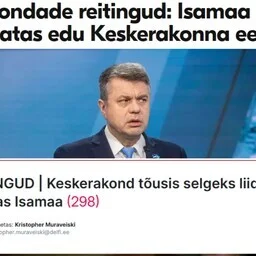
Kolm firma avaldasid uuringud. Nad räägivad
erakondade toetus
est.
erakondade toetus
Tõlge fraasile: erakondade toetus
EN
party support
Turu-uuringud ütlevad, et Keskerakond on
esimesel kohal
. Norstat ütleb, et Isamaa on
esimesel kohal
. Emor ütleb, et Isamaa on Keskerakonnast ees, aga vähe.
esimesel kohal
Tõlge fraasile: esimesel kohal
EN
in first place
esimesel kohal
Tõlge fraasile: esimesel kohal
EN
in first place
Erinevused võivad
segadust tekitada
. Aga erinevused ei pruugi olla suured.
segadust tekitada
Tõlge fraasile: segadust tekitada
EN
cause confusion
Näiteks Emori uuringus oli Isamaa toetus 23,5%. Keskerakond oli Emori uuringus 20,6%. Uuringuekspert ütleb, et
vahe pole suur
.
vahe pole suur
Tõlge fraasile: vahe pole suur
EN
the difference is not significant
Iga firma kasutab erinevaid viise uuringuks. Norstat
küsitleb üle 1000 inimese
nädalas. Emor küsitleb
1500 inimest kuus
. Turu-uuringud küsitlesid 903 inimest.
küsitleb üle 1000 inimese
Tõlge fraasile: küsitleb üle 1000 inimese
EN
surveys over 1000 people
1500 inimest kuus
Tõlge fraasile: 1500 inimest kuus
EN
1500 people per month
Iga firma uuringud on erinevad. See
mõjutab tulemusi
.
mõjutab tulemusi
Tõlge fraasile: mõjutab tulemusi
EN
affects the results
Three companies published surveys. They talk about party support.
The Turu-uuringud survey says that the Center Party is in first place. Norstat says that Isamaa is in first place. Emor says that Isamaa is ahead of the Center Party, but only slightly.
The differences may cause confusion. However, the differences may not be significant.
For example, in the Emor survey, Isamaa's support was 23.5%. The Center Party was 20.6% in the Emor survey. A survey expert says that the difference is not large.
Each company uses different methods for the survey. Norstat interviews over 1000 people per week. Emor interviews 1500 people per month. The Turu-uuringud surveyed 903 people.
Each company's surveys are different. This affects the results.